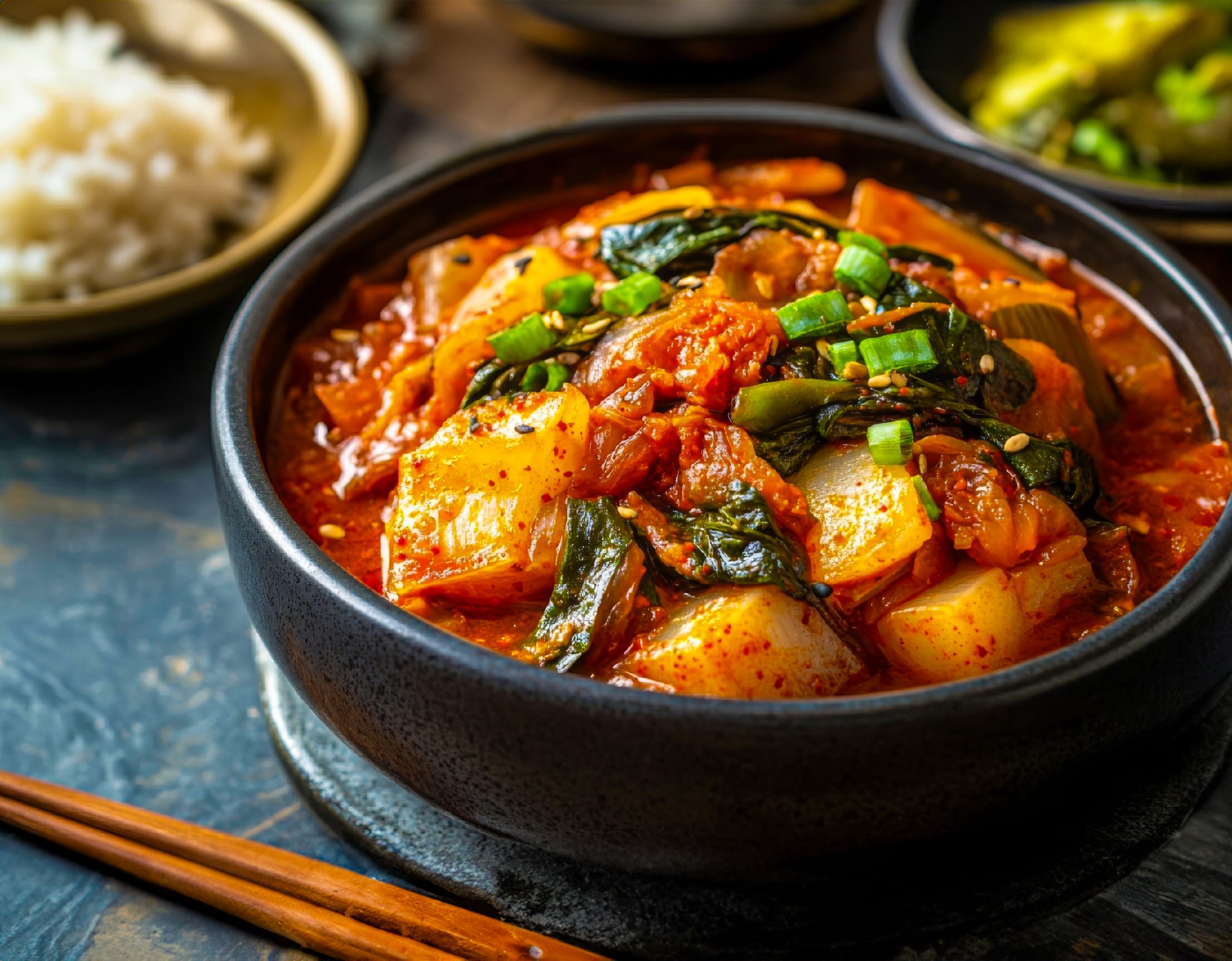
Is Korean Kimchi Disappearing From Korean Tables?
Vocabulary
Article
Read the article aloud on your own or repeat each paragraph after your tutor.Is Korean Kimchi Disappearing From Korean Tables?For decades, kimchi has been at the heart of every Korean meal — it’s spicy, fermented, and full of history. But something unexpected is happening: more and more of the kimchi eaten in Korea today is no longer made in Korea at all.
Step inside Kim Chieun’s factory in Incheon and the smell of red chili hits you immediately. Rows of salted cabbage soak quietly in large metal vats, following a method Kim has used for over 30 years. Yet despite his experience, running the factory has become increasingly stressful, as many restaurants that once relied on local producers like him now choose cheaper kimchi imported from China.
“This market has been taken away from us,” Kim told the Guardian, watching as cheaper imports replace his products on restaurant menus.
Chinese kimchi can cost less than half as much as Korean-made kimchi. In just the first ten months of 2025, Korea imported $159 million worth of kimchi — far more than it exported.
Kimchi also carries deep cultural meaning. There are more than 150 different kinds, shaped by local traditions and family recipes. For generations, families prepared large batches together during kimjang, a winter ritual now recognized by UNESCO. Today, fewer people make kimchi at home, and ready-made kimchi and restaurant servings are becoming the norm.
As a result, this shift has placed enormous pressure on small producers. Most kimchi factories in Korea are tiny operations with only four or five workers, and they simply cannot compete with large-scale Chinese factories that produce kimchi faster and cheaper. Moreover, climate change has made matters worse, causing cabbage prices to rise suddenly and making farming more unpredictable.
Some producers are close to giving up. In response, industry groups and the government are trying to help, offering support to farmers, encouraging restaurants to use Korean-made kimchi, and improving labeling so customers can see where their food comes from.
Still, the real challenge remains. Cheaper kimchi may win on price, but Korean kimchi wins on taste, tradition, and care.
Discussion
Have a discussion based on the following questions.- Were you surprised to learn that Korea now imports so much kimchi?
- What are your thoughts on cheaper imported food replacing local products?
- Do you make an effort to buy locally-made food or products whenever possible?
- Is there a traditional food in your country that fewer people make at home now?
- Is climate change already having a major impact on food production in your country?
Further Discussion
Have a discussion based on the following questions.- Do you like kimchi? If so, what do you usually eat it with? If not, why not?
- What are your favorite South Korean dishes?
- Are there any foreign foods you've gotten into recently?
- What foods from your country do you imagine are most popular with tourists?
- "You have to taste a culture to understand it." — Deborah Cater. What do you make of this statement?