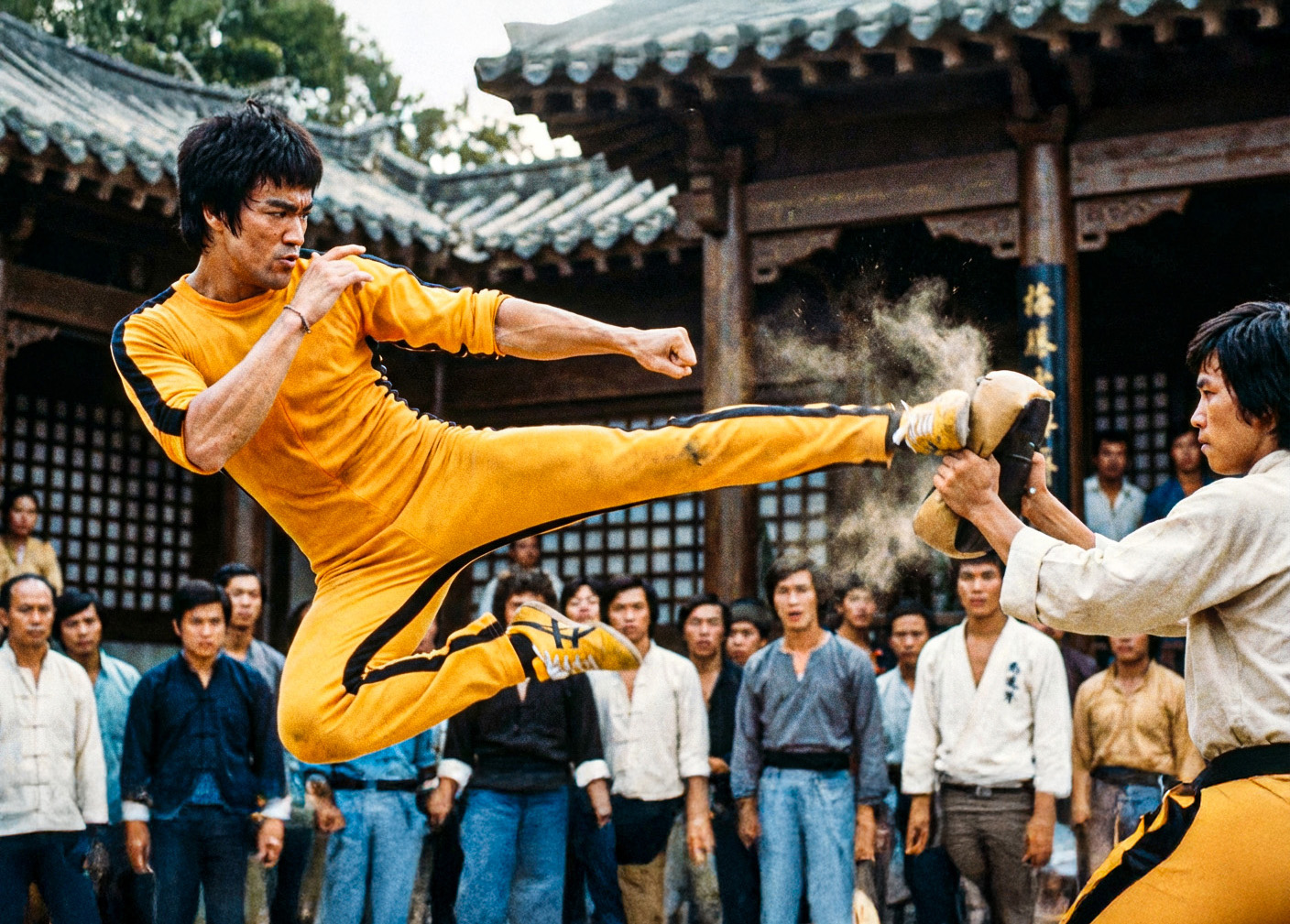
How Bruce Lee Became More Than an Action Star in Japan
Vocabulary
Article
Read the article aloud on your own or repeat each paragraph after your tutor.How Bruce Lee Became More Than an Action Star in JapanIn the early 1970s, movie audiences around the world met a new kind of action hero. His name was Bruce Lee, and he needed no guns, special effects, or flashy costumes. His power came from speed, discipline, and complete control of his body.
When Lee’s films were released in Japan in 1974, they caused a sensation. Cinemas were packed, lines stretched around the block, and viewers copied his kicks and sharp cries inside the theater. His fighting style felt fast, precise, and almost artistic.
Lee also stood out physically. While Hollywood action stars were often large and heavily built, Lee’s lean, muscular body looked different — and powerful in a new way. For many Japanese viewers, he challenged the idea that strength had to follow Western standards.
Another reason for Lee’s popularity was his philosophy. His famous idea of "being like water" encouraged flexibility and adaptation. Japanese audiences saw similarities between Lee's thinking and traditional martial arts values such as balance, discipline, and self-control.
Scenes from Enter the Dragon, including the idea of "winning without fighting," also felt familiar. They echoed old samurai stories where intelligence and restraint were more important than brute force.
Even Fist of Fury, which showed Japanese characters as villains, was extremely popular in Japan. Audiences focused less on politics and more on Lee’s intensity, skill, and sense of honor.
Today, Bruce Lee’s popularity has faded in many parts of the world, but Japan remains an exception. Cinemas still screen his movies from time to time, and new books and magazines about him continue to appear.
More than fifty years after his death, Bruce Lee remains deeply admired in Japan — not just as a movie star, but as a symbol of confidence, discipline, and a different kind of strength.
Discussion
Have a discussion based on the following questions.- What are your thoughts on Bruce Lee’s popularity in Japan?
- Did you know Bruce Lee was so popular with Japanese audiences in the 70s?
- Have you ever watched any Bruce Lee movies? If so, did you enjoy them?
- Do you enjoy watching action movies? Do you have any favorites?
- Would you say that modern films rely too much on special effects?
Further Discussion
Have a discussion based on the following questions.- Are there any foreign celebrities who are especially popular in your country?
- Who would you say are some of the most likable movie characters ever?
- Are there any movie scenes that stayed with you for a long time?
- Are Hollywood movies popular in your country? Have you seen any good ones lately?
- Are there any upcoming movies you're looking forward to seeing?