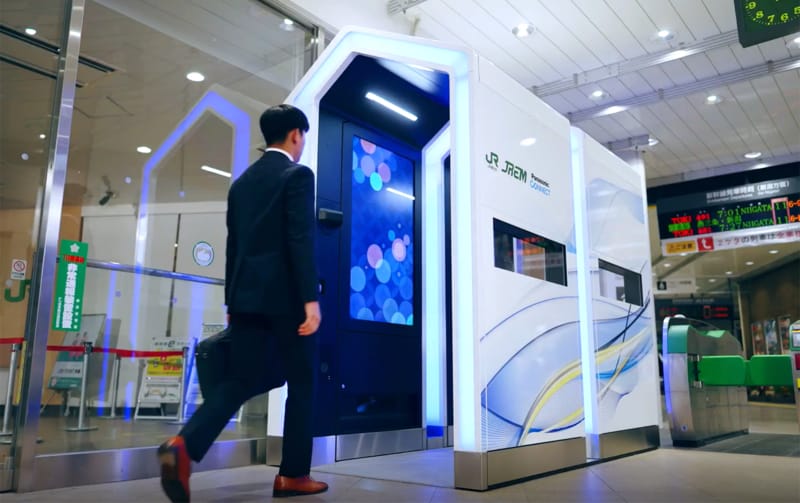
JR East Trials Facial Recognition Ticket Gates
5
Intermediate
Vocabulary
Repeat each word, definition, and example sentence after your tutor.
trialNounˈtraɪəl
the act or process of testing something
Before you sign up, you can take two trial lessons for free.
facial recognitionNounˈfeɪʃl ˌrɛkəgˈnɪʃən
technology that can identify a person's face
Apple added facial recognition technology to the iPhone in 2017.
passNounpæs
a card, document, etc. giving the holder permission to do something
I think I forgot my train pass.
luggageNounˈlʌgɪʤ
bags that a person takes when traveling
I try not to take too much luggage when I travel.
voiceNounvɔɪs
the sounds produced in the throat and mouth as speech or song
She has a beautiful voice.
stepVerbstɛp
to walk or move to a new position by putting one foot in front of the other
The ice started to crack as soon as I stepped on it.
Article
Read the article aloud on your own or repeat each paragraph after your tutor.JR East Trials Facial Recognition Ticket GatesWaiting to get through the ticket gate at a busy train station can add time to your journey.
But some passengers at two Japanese stations can now walk right through the gates without stopping.
JR East has begun a trial of new ticket gates that use facial recognition technology. That means certain passengers can just walk through without showing their tickets or travel passes.
The gates, which have been made by Panasonic, will be at Niigata and Nagaoka stations on the Joetsu Shinkansen until March 2026.
About 500 people are taking part in the trial. All of them have travel passes that let them travel between those two stations on the Shinkansen.
The passengers taking part have already had their photos taken, and the facial recognition gates will check their faces as they walk through.
Panasonic said that people don't need to stop as they walk through — they can just walk at a normal speed.
The company added that the gates could be really useful for people who are traveling with a lot of luggage or with children.
If someone who isn't taking part in the trial tries to walk through a facial recognition gate, a red light will come on, and the person will hear a voice telling them to step back.
Panasonic says its facial recognition technology has worked very well in past tests.
JR East wants to use gates like these in more stations around the country. It plans to begin trials at some Tokyo stations in 2027.
Discussion
Have a discussion based on the following questions.- Where is JR East currently testing facial recognition ticket gates? A. Osaka and Nagoya stations B. Niigata and Nagaoka stations
- Osaka and Nagoya stations
- Niigata and Nagaoka stations
- What happens if someone who isn't taking part in the trial tries to walk through a gate? A. A red light comes on and a voice tells them to step back B. The gate opens and takes their photo
- A red light comes on and a voice tells them to step back
- The gate opens and takes their photo
- When does JR East plan to begin trials at some Tokyo stations? A. 2026 B. 2027
- 2026
- 2027
Further Discussion
Have a discussion based on the following questions.- What are your thoughts on JR East testing facial recognition ticket gates?
- Would you feel comfortable using facial recognition instead of a ticket or pass?
- Do you think facial recognition will make travel faster in the future?
- Have you ever had your photo or fingerprints taken while traveling?
- Have you had any major delays at a train station or airport?