
How Gallery Visits Could Support Good Health
8
Advanced
Vocabulary
Repeat each word, definition, and example sentence after your tutor.
salivaNounsəˈlaɪvə
watery liquid produced in the mouth
The Ebola virus is transferred by body fluids, such as blood and saliva.
regulateVerbˈrɛgjəˌleɪt
to control an activity, process, industry, etc.
The Federal Aviation Administration regulates and oversees commercial aviation in the US.
inflammationNounˌɪnfləˈmeɪʃn
swelling and pain caused by an illness or injury
My sister has eczema, a skin condition that causes inflammation and itchiness.
reproductionNounˌriːprəˈdʌkʃn
a copy of something
I bought a hand-painted reproduction of Van Gogh's "Starry Night" at the local art fair.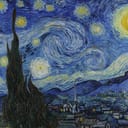
simulateVerbˈsɪmjuleɪt
to imitate conditions that exist in real life, usually for research
The researchers used a computer program to simulate the future impact of sea level rise on the island.
chronicAdjectiveˈkrɑːnɪk
continuing for a long time or happening often
Eating a healthy diet reduces the risk of developing chronic diseases such as diabetes and heart disease.
Article
Read the article aloud on your own or repeat each paragraph after your tutor.How Gallery Visits Could Support Good HealthLooking at art in a gallery isn't just a nice use of an afternoon, it could have benefits for your health. A study led by researchers at King's College London found that looking at paintings could reduce stress and lower the risk of heart disease and other illnesses.
The researchers had 50 participants, aged 18 to 40, view paintings while wearing digital watches that measured their heart rate and skin temperature. The participants also had samples of their saliva taken before and after looking at the art so the researchers could check their cortisol and cytokine levels.
Cortisol is a hormone that regulates stress, while cytokines are proteins that help control inflammation in the body.
Half of the participants spent 20 minutes looking at paintings in London's Courtauld Gallery, while the other half looked at reproductions of the same paintings in a laboratory-controlled room made to simulate gallery conditions.
The paintings included in the study were by Vincent Van Gogh, Henri de Toulouse-Lautrec, Édouard Manet and Paul Gauguin. There were five in total and the participants were asked to look at each one for around three minutes after reading their accompanying information card.
After looking at the art, the cortisol levels of both groups fell, but by an average of 22% for those who went to a real gallery compared with only 8% for those who viewed the reproductions.
Those looking at the original paintings also showed signs of excitement and emotional engagement with the art, including repeated dips in skin temperature, higher heart rates and more varying heartbeat patterns.
Both groups showed a decrease of around 30% in pro-inflammatory cytokines, which promote inflammation as part of the body's immune response.
The study's first author, Tony Woods explained that pro-inflammatory cytokines and the stress hormone cortisol are associated with chronic health issues like heart disease, diabetes, depression and anxiety.
He said the fact that viewing the original art lowered the levels of both cortisol and cytokines "suggests that cultural experiences may play a real role in protecting both mind and body."
Discussion
Have a discussion based on the following questions.- What are your thoughts on the study's findings?
- Are you surprised that looking at original paintings had a stronger effect than looking at reproductions?
- When did you last go to an art gallery?
- What famous works of art have you seen in person?
- Are there any famous works of art you'd love to see in person?
Further Discussion
Have a discussion based on the following questions.- Do you have a lot of art on your walls?
- Do you have your eye on any artworks you'd like to get for your home?
- Do you often visit museums and art galleries when you travel?
- Are there any museums or galleries worth visiting in your town or city?
- If I could say it in words, there would be no reason to paint. — Edward Hopper. What do you make of this quote?