
AI to Make Google Maps More Conversational
7
Advanced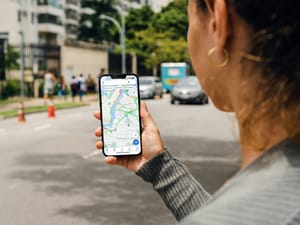
Vocabulary
Repeat each word, definition, and example sentence after your tutor.
navigationNounˌnævɪˈɡeɪʃn
the process of determining one's position and planning and following a route to reach a destination
I almost never use the GPS navigation system in my car because the maps aren't up to date.
insightfulAdjectiveɪnˈsaɪtfl
having or showing a deep and clear understanding
She made some very insightful comments during the meeting.
fumbleVerbˈfʌmbl
to do or handle something in a clumsy way
Maria fumbled with the lock for a few minutes before finally getting the door open.
landmarkNounˈlændˌmɑːrk
an object, building, etc. that is easily recognized and helps one know where one is; an object, building, etc. that is historically important
The mountain was once a landmark for ships trying to find the harbor entrance.
safeguardNounˈseɪfˌgɑːrd
something done or introduced to protect against harm, damage, etc.
The bank is implementing new safeguards to protect against cyberattacks. 
impressVerbɪmˈprɛs
to make someone respect or admire a person or thing
If you want to impress your interviewer, make sure you're punctual and professional. 
Article
Read the article aloud on your own or repeat each paragraph after your tutor.AI to Make Google Maps More ConversationalUsing Google's Gemini AI technology, the world's most popular navigation app will be getting more conversational as part of a redesign announced on November 5.
The change is meant to turn Google Maps into something more like an insightful passenger, able to direct a driver to a destination while also offering ideas on places to eat, shop or sightsee.
"No fumbling required — now you can just ask," Google promised in a blog post about the change.
The AI will also let Google Maps name landmarks to look out for when making a turn, instead of just giving a distance at which to turn.
AI chatbots like Gemini and OpenAI's ChatGPT have been known to sometimes make things up, or "hallucinate." But Google is promising that it will build in safeguards that will stop Maps from sending drivers down the wrong road by mistake.
All the information that Gemini uses will come from the roughly 250 million places stored in Google Maps' database of reviews collected during the past 20 years.
Google Maps' new AI will be coming to both Android phones and Apple's iPhones.
That will give Google's Gemini a big audience to impress — or disappoint — with its AI, since the Maps app is used by more than 2 billion people around the world.
Google is also hoping that adding its AI to Maps will help bring attention to Gemini, and give it an advantage against ChatGPT.
Since OpenAI released ChatGPT in late 2022, Google has been adding more and more AI to its own products. Even Google's popular search engine has been focusing less on listing web links, and more on AI overviews and conversational responses.
Discussion
Have a discussion based on the following questions.- What are your thoughts on Google adding AI to Google Maps?
- How often do you use Google Maps? Have you ever had trouble with it?
- Are you good at finding your way without a map?
- Have you ever gotten lost while traveling?
- Do you know anyone with a terrible sense of direction?
Further Discussion
Have a discussion based on the following questions.- Have you used Gemini before? How did you find it?
- What are the most impressive AI tools or features you've tried?
- Are there any AI tools you've found disappointing?
- Are there any apps you think could benefit from having AI added to them?
- Do you think AI will ever be 100% reliable?